Mo Duvall-Wenstein’s move to Grundy
How to Flirt with A Naked WerewolfMo Duvall-Wenstein’s move to Grundy is the foundational event of the novel: a deliberate flight from a life chosen in reaction to other people that becomes the threshold to an unexpected community, a dangerous romance, and a new family. What begins as a one-year attempt to drift without purpose eventually places her inside the social and supernatural networks surrounding Cooper Graham, while the remote town’s isolation turns both reinvention and vulnerability into daily realities.
Causes and Decision
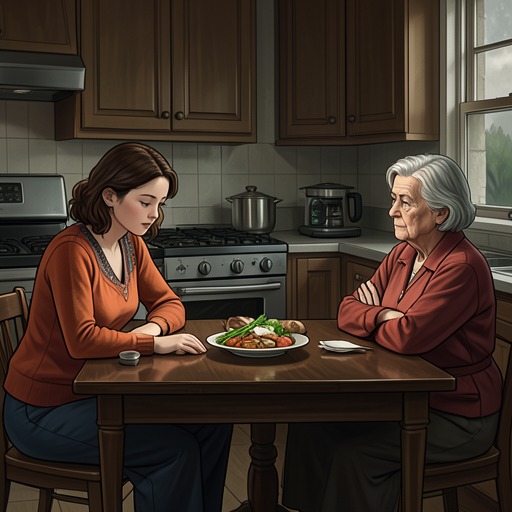
Mo’s relocation follows the collapse of her engagement to Tim Galloway. He returns the ring after deciding that he proposed too soon, and his criticism forces Mo to recognize that she had selected both her fiancé and her advertising career partly to oppose her parents. Her work at Gulfside Marketing provided independence in appearance but not in motive; she had been allowing parental expectations to govern her choices even while rebelling against them. At twenty-nine, she decides that continuing to live like a “spoiled, scared teenager” would leave her trapped in a marriage and career neither she nor her parents truly wanted.
The move therefore carries two motives at once. Mo wants to escape her hometown and become an unknown quantity beyond her parents’ reach, but she is also afraid that distance will expose her own responsibility for her unhappiness. Grundy offers a test of whether she can make choices without spite, family pressure, or the need to perform normality. She resigns from Gulfside Marketing and gives up her lease within a week of discovering the town’s rental listing, making the decision abrupt enough to feel like both a carefully chosen plan and an act of emotional escape.
Arrival in Grundy
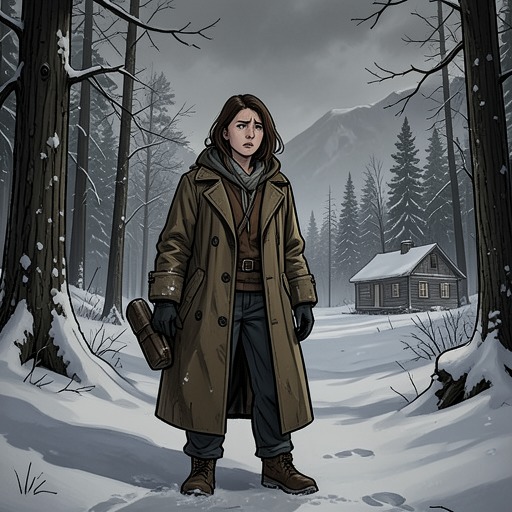
Mo reaches Grundy after driving thousands of miles in her aging 1999 Ford, Lucille, enduring bad coffee and a three-day ferry ride from Washington. The arrival is staged as a physical passage into a radically different scale of life. The carved “Welcome to Grundy” sign announces a population of 2,053, and Mo immediately recognizes that her presence will alter that number. The town itself is small enough to see at once: a long main street of shops, a few branching streets, several dozen one-story houses, and roughly fifty square miles of isolated homes beyond the limits.
Her first impressions combine admiration, discomfort, and comic apprehension. She pauses beside the sign to let Lucille rest, studies its integration of Inuit artistic motifs, and shivers in late June despite wearing a new North Face jacket. The unfamiliar climate contrasts sharply with the oppressive humidity of the Mississippi Delta, where Mo previously lived. Grundy’s physical remoteness is not merely scenic; it makes the move tangible as a separation from the environment, habits, and social expectations that formed her previous identity.
The practical destination is the Meyers place, a six-hundred-square-foot rental with one bedroom, a living room, a bath, and a kitchenette. Its forest view persuades Mo to choose it despite its Spartan size. Nate Gogan, Grundy’s lone attorney, handles the rental, while the town’s limited economy confirms that the move will not be a conventional career transfer. Mo has chosen a place where professional credentials may have little immediate use and where establishing a life will require adaptation rather than simply continuing her former one at a distance.
The One-Year Experiment
Mo finances the move with a carefully saved inheritance from Grampy and Nana Duvall. Her mother had rejected the money as “blood money” because it came from the family-owned butcher shop and barbecue stand, leaving Mo the sole heir. The inheritance had previously supported her through college stipends and poor early sales commissions; in Grundy, it becomes the material condition of her independence. She can afford to live for a year or two without immediately accepting work that would reproduce the dissatisfaction she is trying to understand.
Her stated plan is to live in Grundy without a purpose for one year and discover what she wants when her choices are no longer acts of rebellion. Selling advertising space had not been meaningless to her, but it had not felt consequential either. She imagines a provisional period of drifting, followed by a practical decision: if Grundy becomes viable, she will make a down payment on the Meyers place, find employment for which she is qualified, and put down roots. If the experiment fails, Washington, New York, or even Monkey’s Eyebrow, Kentucky, remain possible alternatives.
This plan gives the event its central value shift. Mo begins with freedom but little direction, and with independence complicated by fear and unresolved family influence. Grundy does not instantly provide purpose; instead, it removes the familiar structures that allowed her to avoid deciding what purpose might mean. The relocation is consequently less a settled new beginning than an intentional suspension between identities.
Unintended Consequences
The move places Mo within a community whose apparent simplicity conceals a werewolf society. Through Evie DuChamp, she learns that some families can transform while others are “dead lines,” unable to do so. Cooper Graham is unusual even within his own line: he was among the first of his generation to become a wolf, was expected to become his generation’s alpha because of his speed and strength, and nevertheless left the packlands in Crescent Valley for Grundy. Mo’s choice to leave one social world thus intersects with Cooper’s painful departure from another.
Her relationship with Cooper gradually converts the isolated rental into a shared home. His shirts appear in her closet, his toothbrush joins hers, and he brings groceries to replace the extraordinary quantities of food he consumes. Their intimacy blurs the boundaries Mo once would have guarded, while his wolf nights and guiding jobs preserve intervals of absence that make his presence feel newly precious. The home she intended as a temporary retreat becomes a place of attachment, shared meals, physical closeness, and the expectation that neither partner should simply disappear.
The consequences are not only romantic. Grundy exposes Mo to violence and to the traumatic persistence of danger. John Teague’s assault leaves her with intrusive images, bodily reactions, and fear that return when she revisits the alley; later, the discovery of Abner Golightly with deep claw wounds and a weak pulse makes the wolf threat concrete. Cooper’s inability to remember the night of Abner’s attack creates a new uncertainty within their relationship, because his missing wolf-state memory raises the possibility that he might have harmed someone without knowing it. The move has brought Mo away from her parents, but not away from risk; it has exchanged familiar pressures for dangers that are more intimate, more mysterious, and more consequential.
From Escape to Belonging
The relocation’s deepest reversal is that Mo’s escape from family becomes the route toward another form of family. Cooper explains that werewolf marking is permanent: once he marked a partner, he could not mate with anyone else, because wolves mate for life. The revelation changes the meaning of their earlier intimacy from an intense but potentially temporary relationship into a binding connection governed by werewolf magic, bloodline, and exclusive partnership.
Pregnancy makes that connection irreversible in practical as well as supernatural terms. Mo researches human women carrying werewolf babies and learns that the gestation period is approximately six months, midway between human and wolf pregnancies, with shortened gestation and overwhelming food cravings among the few recorded details. Her private one-year experiment is suddenly no longer private or solitary: the future includes a child whose existence links human and werewolf inheritance and forces Mo to consider whether she can raise the baby alone.
The event ultimately culminates not in Mo’s return to the life she abandoned but in a new domestic commitment. Cooper asks Mo to marry him and raise their baby together, his hand moving over the belly that will soon be full and round. The move to Grundy therefore changes from an attempt to remain without a purpose into the beginning of a purpose defined through chosen attachment. Mo sought a place where no one knew her and where her parents could not reach her; she finds instead a community in which danger, secrecy, bloodline, partnership, and belonging are inseparable. Grundy becomes the setting where independence ceases to mean isolation and becomes the freedom to choose a life that is genuinely her own.